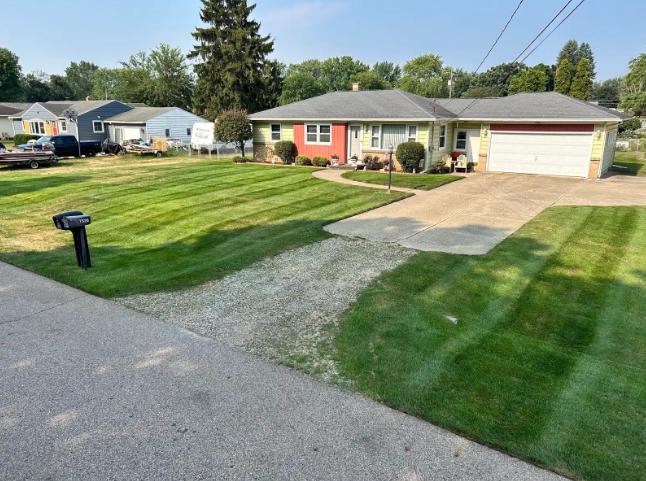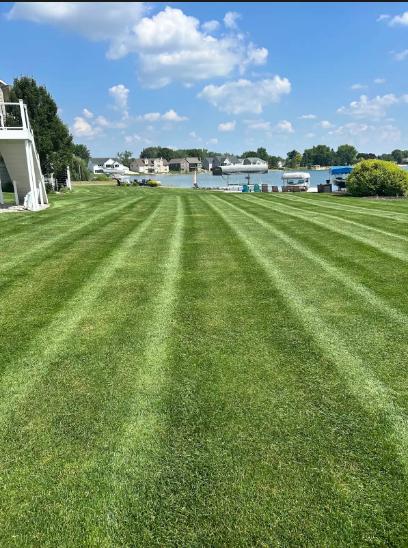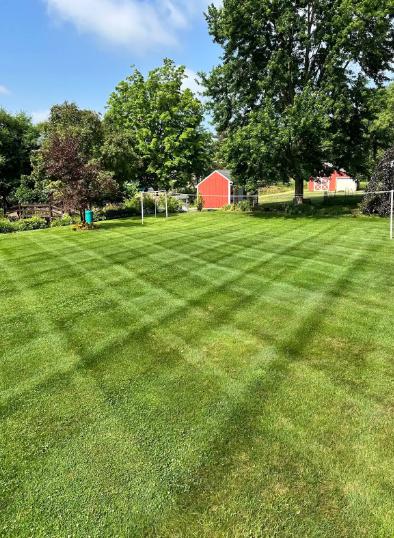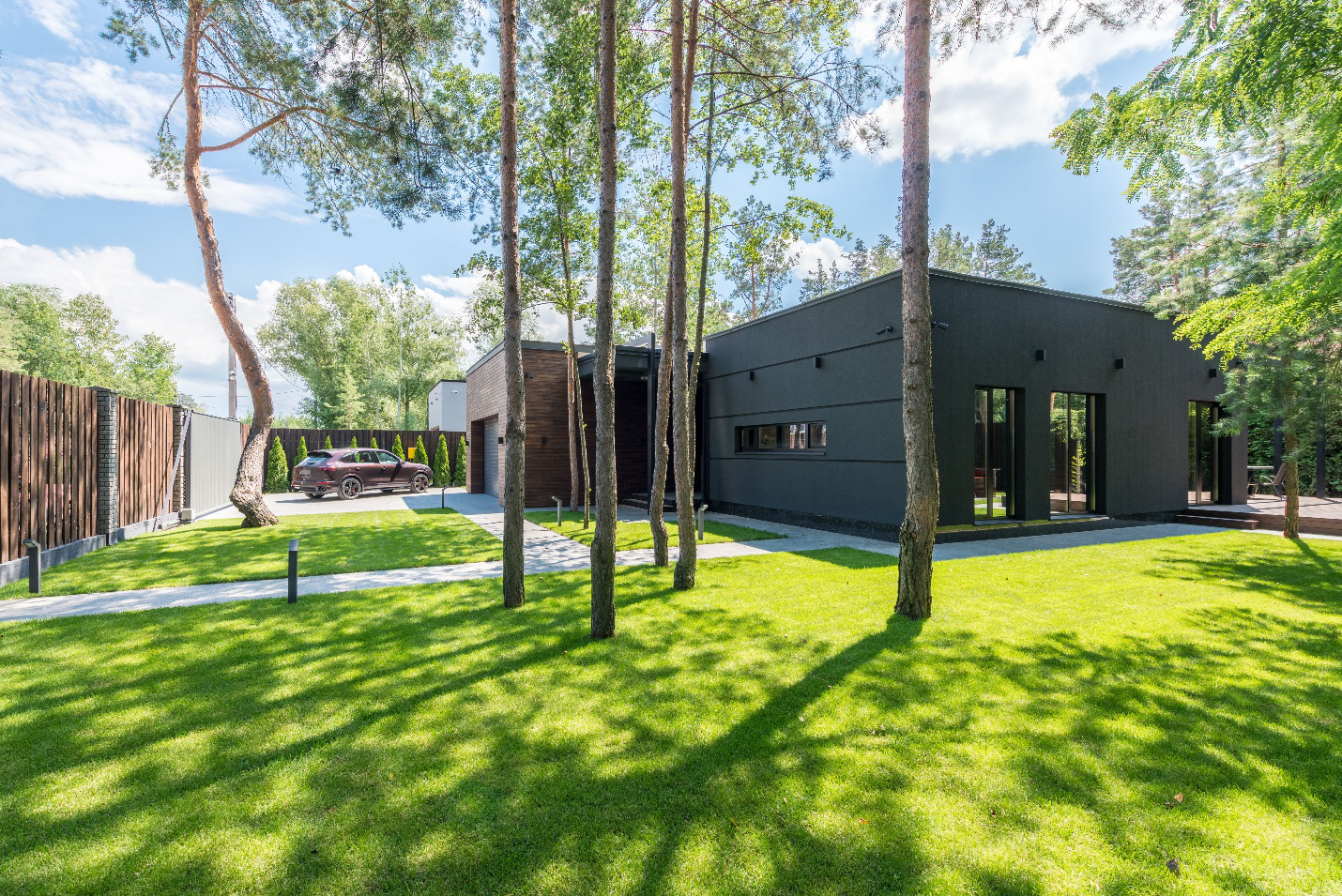
Mowing height is one of those details most homeowners set once in spring and never think about again. In late fall, it matters more than at any other point in the year. As a family-owned lawn mowing service in Hudsonville, we adjust deck height on every property through October and November, because the height your grass carries into winter shapes how it looks in April.
Our page on how our mowing visits work covers the basics. Here, we break down why 2.5 to 3 inches is the target, what goes wrong on either side of it, and how residential lawn mowing services should change frequency as growth slows.
Why 2.5 to 3 Inches Is the Target
Cool-season grasses like Kentucky bluegrass and fescue carry their energy reserves in the crown and lower leaf tissue. Leaving 2.5 to 3 inches of blade going into winter gives the plant enough leaf surface to keep storing energy through late fall, without so much length that it flops over under snow.
Michigan State University Extension’s guide to mowing lawn turf explains how mowing height affects root depth and overall turf health, which is why we keep lawns taller through summer. The late-fall drop is modest by design: just enough to reduce matting, not enough to stress the plant.
Grass type and shade play a role too. Shaded areas under trees should stay on the taller end of the range because they already receive less light, while open, sunny areas handle the lower end well. We note those differences on each property so the final height fits the conditions instead of one number for the whole yard.
What Happens When a Lawn Is Scalped Before Winter
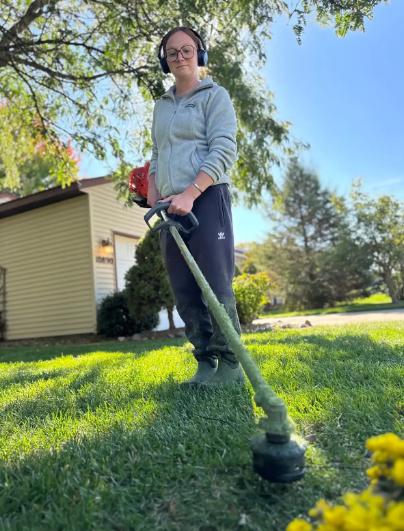
Scalping means cutting so low that you expose the crown or bare soil. Some homeowners do it on purpose on the last mow, thinking a very short lawn will need less cleanup in spring. It usually backfires.
A scalped lawn has little leaf tissue left to produce energy in the final weeks of the season, and exposed crowns are vulnerable to drying winds and freeze damage. In spring, scalped areas green up late and give crabgrass and other weeds open soil to move into.
Uneven ground makes scalping more likely. High spots, slopes, and areas along sidewalks can get cut much lower than the rest of the lawn if the deck is set too low. Keeping the final height at 2.5 inches or above leaves enough margin to avoid bare patches on bumps and edges.
Purdue University Extension’s publication on mowing, dethatching, aerifying, and rolling turf covers why removing too much leaf at once weakens grass. That is why we never take off more than one-third of the blade in a single visit.
What Happens When a Lawn Goes Into Winter Too Long
The opposite mistake is just as common. When the last mow happens in early October in Wyoming, MI and the grass keeps growing for another four weeks, it can go into winter at four or five inches. Snow presses those long blades flat into a dense mat.
hat mat traps moisture and creates the conditions for disease. Penn State Extension describes pink snow mold as a disease that favors cool, wet weather and can develop with or without snow cover, often showing up as tan or pinkish patches in spring. Long, matted grass also gives voles protected runways across the lawn all winter.
How Mowing Frequency Shifts as Growth Slows
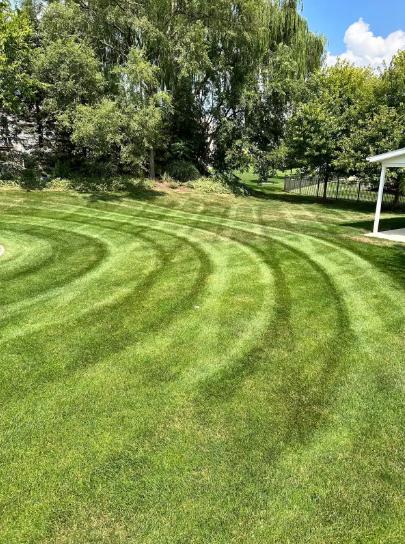
Height and frequency work together. In September, most lawns in our area still grow fast enough to need weekly cuts. By mid-October, growth slows and many properties shift to bi-weekly visits. In November, we time the final cuts to actual growth rather than a calendar date.
We lower the deck in steps across those last few visits, usually from about 3.5 inches down to 2.5 or 3 inches. Each cut removes a small amount, the lawn adjusts, and the final height lands where it should without shocking the grass.
Wet fall conditions factor in as well. Mowing soaked turf with heavy equipment can leave ruts, so we watch soil conditions after rain and shift a visit by a day or two when needed rather than tearing up the lawn to stay on schedule.
Frequency also matters for leaves. A lawn cut every week or two in October stays clear enough for us to mulch leaf cover during each visit, which keeps the turf exposed to light while it is still storing energy for winter.
Set the Height Right and Let the Lawn Rest
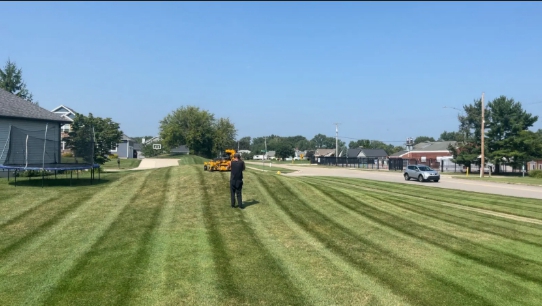
The last three or four cuts of the year decide how your lawn comes out of winter. Keep the height between 2.5 and 3 inches, lower it gradually, and keep mowing until growth stops. A good grass cutting service will handle all three without you having to ask.
If you want the best lawn mowing service for your property, look for a crew that changes deck height and frequency as the season shifts. Year-round lawn care services in Wyoming, MI, that respond to the weather will always outperform a routine that runs the same setting from May through November.
Cut & Trim has mowed lawns across Ottawa County since 2000 with no contracts and simple monthly billing. Contact us to schedule your late-season cuts.